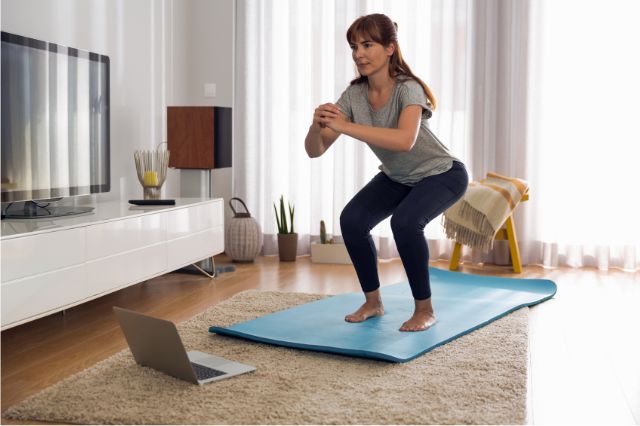
After turning 50, exercise stops being just about looks and becomes a key tool for feeling good every day. Maintaining mobility, reducing pain, and keeping your energy levels up is absolutely possible without going to the gym or using expensive equipment. In fact, working out at home can be one of the safest and most sustainable options in the long run.
In my case, since I started exercising regularly and doing stretches, I’ve noticed something very clear: I no longer have back pain and I feel much more energetic overall. And that’s exactly what most people are looking for at this stage of life.
In this guide, I’ll show you how to exercise at home for people over 50 without equipment, in a simple, safe, and realistic way.
Why Exercise at Home After 50?
As the years go by, it’s normal to lose muscle mass, joint mobility, and balance. The real problem isn’t age — it’s inactivity.
Exercising at home has several clear advantages:
- You’re not dependent on schedules or the weather
- You reduce the risk of injury from overtraining
- You can adapt the intensity to your real fitness level
- It’s easier to stay consistent
Training at home also removes the pressure to “do it perfectly.” What really matters is moving well and regularly, not pushing yourself to exhaustion.
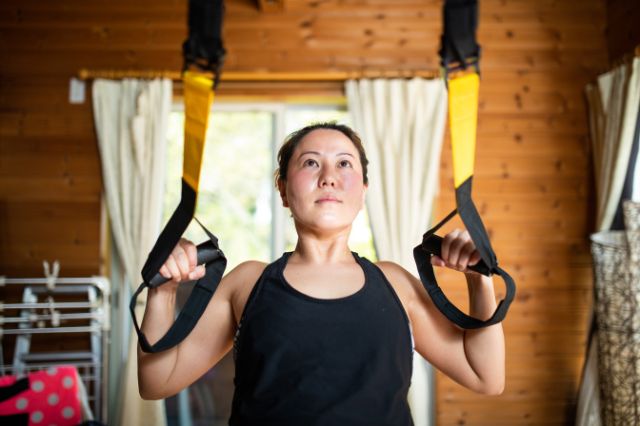
Real Benefits of Exercising Without Equipment
Less Back Pain
One of the biggest fears after 50 is lower back pain. The reality is that proper movement usually relieves it rather than makes it worse. Gentle strength exercises and stretching help improve posture and take pressure off the spine.
From my own experience, combining exercise with stretching made a huge difference: the constant discomfort disappeared and my body feels much looser.
More Energy in Daily Life
Although it may seem counterintuitive, moving your body gives you more energy. Activating your muscles improves circulation and reduces the stiffness many people feel in the morning as they get older.
Many people notice that after a few weeks of training, they sleep better and feel less tired by the end of the day.
Gentle Strength Exercises for People Over 50
Strength training is essential for maintaining independence. These exercises can be done without weights and without impact:
- Chair Squats
Strengthen legs and glutes. Lower yourself with control and gently sit down. - Wall Push-Ups
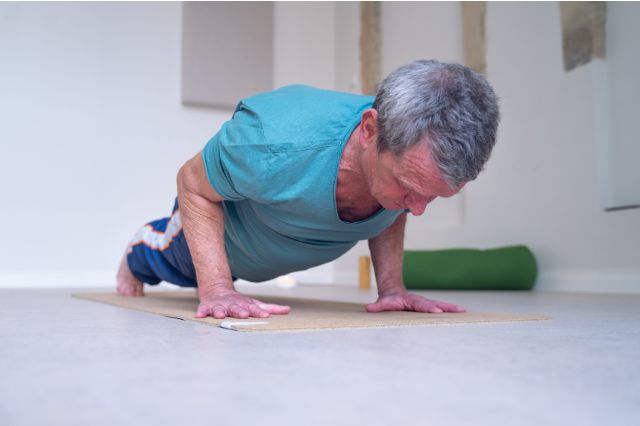
Work the arms and chest without stressing the shoulders. - Heel Raises
Stand tall and slowly rise onto your toes to strengthen calves and improve balance. - Glute Bridges on the Floor
Excellent for lower back support and core stability.
👉 2–3 sets of 8–12 repetitions are more than enough.
Mobility and Balance Exercises
Mobility is what allows you to move without pain.
- Shoulder and hip circles
- Spinal mobility exercises (gentle cat–cow)
- Standing on one leg while holding onto a wall or chair
These exercises reduce stiffness and help prevent falls, one of the biggest risks after 50.
Key Stretches to Protect Your Back
This is one of the most underestimated — yet most important — parts of training.
Since I made stretching a regular habit, I noticed how my back stopped feeling tight and how my body recovered much better overall.
Recommended stretches:
- Hamstrings
- Glutes
- Lower back
- Chest and upper back
Hold each stretch for 20–30 seconds, without bouncing.
How to Create a Weekly No-Equipment Routine
You don’t need to train every day.
Simple example:
- 3 days per week: strength + mobility (20–30 minutes)
- 2–3 days: walking or light activity
- Short stretching session at the end of each workout
The key isn’t intensity — it’s consistency. Doing a little, regularly, is far better than doing a lot for one week and then stopping.
Common Mistakes When Training After 50
- Trying to progress too fast
- Copying routines designed for younger people
- Ignoring “minor” aches and pains
- Never stretching
Listening to your body is essential. Exercise should make you feel better afterward, not worse.
Tips to Stay Consistent Without Getting Injured
- Start with less than you think you can do
- Prioritize good technique over repetitions
- Rest when you need to
- On low-energy days, focus only on mobility or stretching
This approach is what allows exercise to become a long-term habit.
Frequently Asked Questions About At-Home Exercise for People Over 50
How many days a week should I exercise?
Between 3 and 5 days, combining strength, mobility, and light activity.
Is it safe to exercise without equipment?
Yes, as long as you control the movements and avoid impact. Bodyweight exercises are more than enough.
Does exercise really help reduce back pain?
In most cases, yes. Many people experience clear improvements when they combine strength and stretching regularly — as I did myself.
How long does it take to see results?
Usually within 2–4 weeks, you’ll notice less discomfort and more energy.
Start today!
At-home exercise for people over 50 without equipment is not only possible — it’s highly recommended. It’s not about training hard, but about moving well, taking care of your body, and improving your quality of life.
When exercise becomes a habit, the benefits follow naturally: less pain, more energy, and an overall sense of well-being that truly makes a difference in everyday life.
